Click to enter complete search
Broadway Malyan's Greater Muscat Structure Plan officially launched
19th May 2026

Award-winning Greater Muscat Plan organises 137,000 hectares around a new spatial logic for Oman's capital

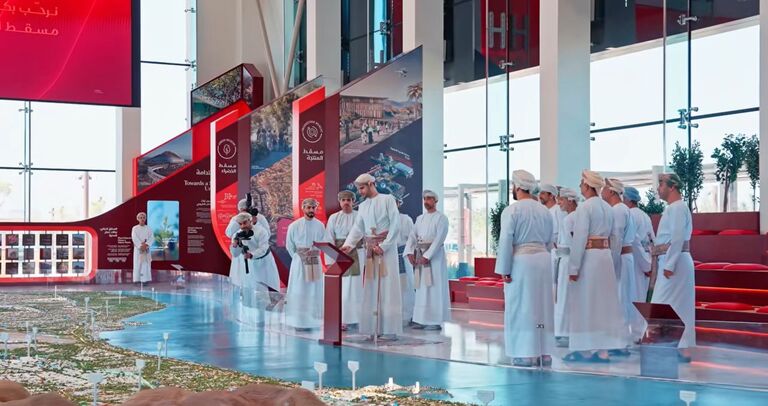
The Greater Muscat Structure Plan, developed by Broadway Malyan for Oman's Ministry of Housing and Urban Planning, has been officially launched by His Highness Sayyid Bilarab bin Haitham Al Said, Minister of State and Governor of Muscat, at the Experience Centre Building in Sultan Haitham City.

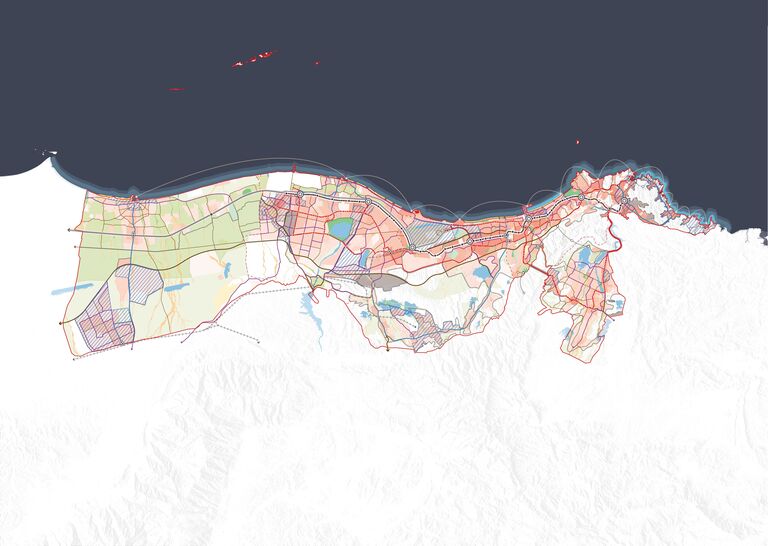
Covering 137,000 hectares across five City Zones, the plan establishes 120 new planning policies and more than 300 costed and sequenced projects to guide Greater Muscat's transformation through to 2040. One of the key outputs of Oman's National Spatial Strategy, it provides a primary tool for guiding urban development in support of the ambitions of Oman Vision 2040.
A single spatial idea

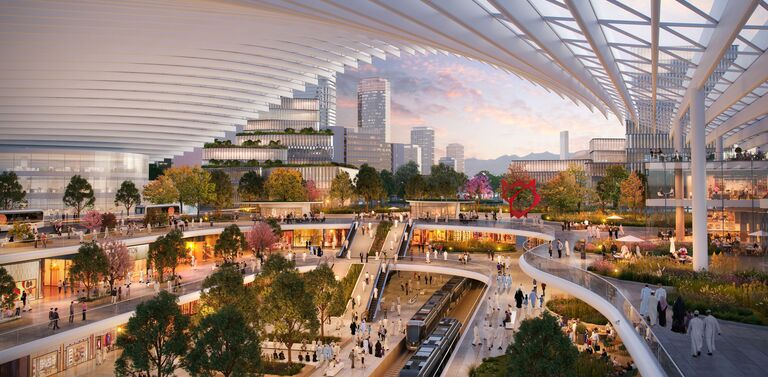
Broadway Malyan's design response is organised around five vision aims that establish Muscat as a greener, more liveable, better-connected, productive, resilient and safe capital and structured upon one overarching concept: the Blue Spine. A primary transit artery running through the metropolitan region from Sultan Haitham City in the west to Ruwi and Muttrah in the east, the Blue Spine threads together seven transit-oriented development nodes, each assigned a distinct economic identity, from financial services and technology to logistics, tourism and cultural heritage. An integrated network of LRT, BRT, Commuter Rail, GCC Rail and guided bus and micromobility infrastructure connects these nodes and the communities that grow between them.

Between the anchor nodes, the plan introduces the fifteen-minute neighbourhood as the organising unit of residential life: walkable, mixed-use communities where services, green space and transit are accessible without a private car. This directly challenges the low-density villa expansion that has shaped Muscat's outward growth for decades and provides a new rationale for density, investment and community life across the city.

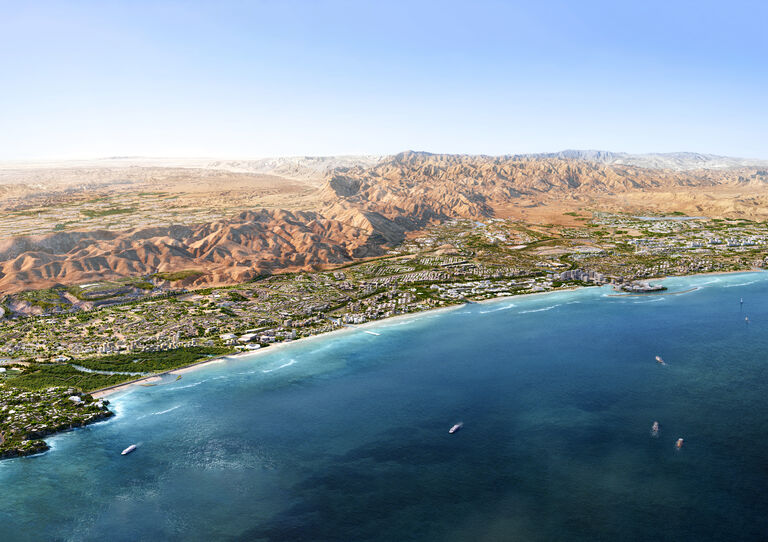
A city shaped by its geography

Greater Muscat is home to around 1.5 million people today, with its population forecast to nearly double by 2040. The plan provides a framework for up to 313,000 new homes delivered through new and regenerated communities, targeting 20 per cent of all trips by public transport and 80 per cent of residents within walking distance of a transit stop.

Building height will be controlled across the city with three areas designated for tall buildings; in Ruwi where the maximum building height will be 20 floors, Downtown with iconic waterfront towers and the area of the CBD in Ghala and Al Irfan with towers up to 150 metres.

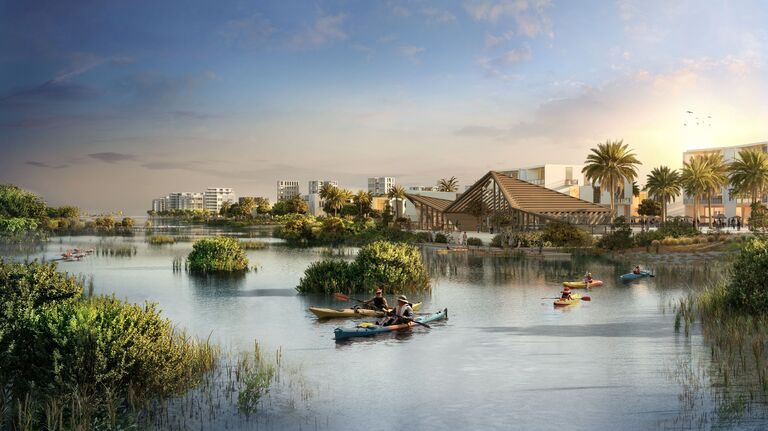
Design guidelines reinterpret Oman's vernacular architectural heritage through materiality, courtyard typologies, shaded street sections and human-scaled massing, ensuring new development is rooted in its context rather than imported from elsewhere. The city's wadi systems, long treated as a flood hazard, are repositioned as civic assets, forming the backbone of an integrated network of parks, ecology and landscape-led flood management.

A live investment prospectus

Structured as a costed and digitally modelled investment prospectus rather than a fixed policy document, the plan is housed within a live GIS-based smart city model that enables MOHUP to track, update and communicate its implementation as a dynamic governance tool.

Broadway Malyan chair and head of masterplanning Ed Baker said: "The Blue Spine is the armature around which a more coherent, liveable and economically resilient Muscat can be built. Every major decision in this plan, where density sits, where height is permitted, how heritage is read, how wadis are managed, flows from that single spatial logic.

"Muscat has exceptional qualities: mountains, coast, wadis and a culture with real depth. Our task was to develop a framework that works with those qualities rather than over them, and to make it genuinely investable and deliverable, not merely aspirational."

Ed Baker, Head of Masterplanning

"Muscat has exceptional qualities: mountains, coast, wadis and a culture with real depth. Our task was to develop a framework that works with those qualities rather than over them, and to make it genuinely investable and deliverable, not merely aspirational."

Ed Baker, Head of Masterplanning

The plan was shaped by a major programme of evidence gathering and community engagement. More than 3,000 documents were reviewed, 4.2 terabytes of data were coordinated through GIS systems and more than 4,000 residents contributed to the process.

Broadway Malyan led a multidisciplinary international team with F&M Middle East as local contract holder, alongside Cundall, MIC-HUB, Pegasys, PAL, OTU, JLL, Kennedys, Brash Wiedemann Lampe and Fifth Estate.

Image credits: Oman Ministry of Housing and Urban Planning

Listing details