At Broadway Malyan, we work at the intersection of city systems, buildings and interiors, across the breadth of spaces, networks and policy. Our role is not only to design spaces but to create ideas and environments that will last, and evolve with the users, cultures and environment they engage.
The architecture of time
It is said that humanity first learned to mark the passage of time at the dawn of agriculture. In the transition from a nomadic existence to fixed communities, the passing of seasons began to register against the non-moving village. City-building is one of our oldest and slowest disciplines; we have etched inert, permanent forms onto a natural world that is inherently dynamic.
Today, we face a fundamental friction: the "fixedness" of our cities and settlements, is butting against a natural tapestry that is changing faster than ever before. Some of our urban forms find new functions under these conditions, some are lost to time; the most successful will be those designed to evolve with the natural environment.
The challenge of designing cities for a changing natural world has two unpalatable truths; the design of the space, their materiality, rigidity and relative inflexibility, and the urban policy that underwrites social behaviour and markets.
For decades, urban climate policy has prioritized resilience: defined as the capacity to "bounce back" to the status quo after a disaster. In the US, this was reinforced by insurance mandates that required building back to exact pre-event conditions. However, trying to maintain a status quo in a warming world is like hammering a nail into a river and asking it to stay put. This is the resilience paradox.
Walling out vs. inviting in
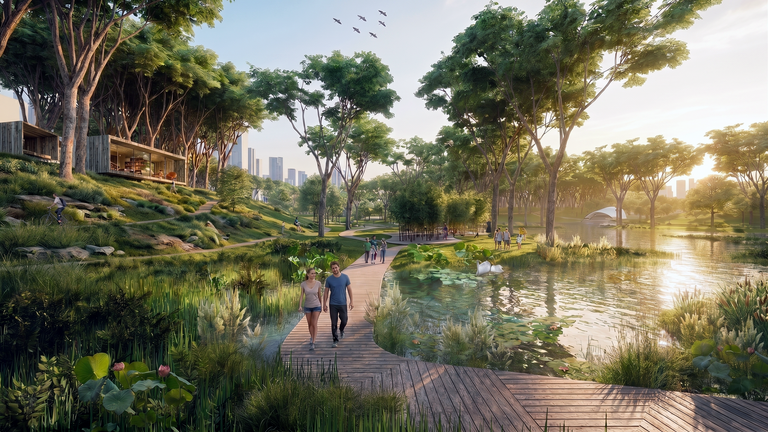
In urban design, there is movement away from carbon-intensive, rigid barriers. Instead of "walling out" nature, good urban design practice is looking toward "Sponge Cities" and softer solutions, an approach popularized by Kongjian Yu, that invites the environment in as a dynamic component.
Policy as a "sensory organ"
The second component to creating adaptable places is to create an urban policy framework that favours adaptation over historic ideas of resilience that insist on building back from environmental impact. Cities require adaptive capacity and the ability to evolve alongside existing conditions. Globally, this approach is at odds with property, investment and insurance market norms.
Across coastal cities, we are witnessing climate gentrification: as flood zones become uninsurable, investment is quietly moving to higher ground, pricing out the communities who already live there. The question is no longer whether cities must adapt. It is whether they can afford to, and whether that adaptation will be equitable.
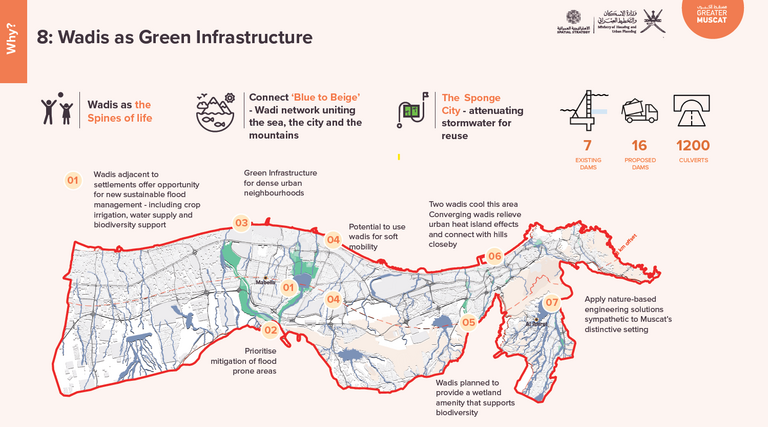
* The image below references the Muscat Structure Plan as an example of a policy framework.
Strong urban governance and the redistribution of resources
For too long, urban climate policy has prioritised resilience: the capacity to bounce back from discrete shocks. Cities now face a convergence of threats, flooding, heat, inundation, none of which most municipalities can afford to address. What if we could harness value generated by development in climatically resilient areas of cities, and redirect resource to manage and foster the creation of natural spaces while relocating at risk residents?
These ideas are starting to be prototyped in world cities, from green multi-functional floodable spaces around the edge of Manhattan, to Washington DC’s Stormwater Retention Credit market, that incentivises developers to contribute to climate infrastructure by purchasing ‘stormwater credits’ from third parties who build green infrastructure along areas of cities that need it. Both are examples of design and policy ideas that help foster adaptive behaviour where the city evolves to meet changing climatic conditions, while markets respond to climate risk, and direct capital accordingly. In theory, this is called ecological entanglement, where cascading heuristic indexes tightly link environmental process to social behaviour response. Or in simpler terms, a designed system in which when one part shifts, the other will shift to meet it.
From theory to practice
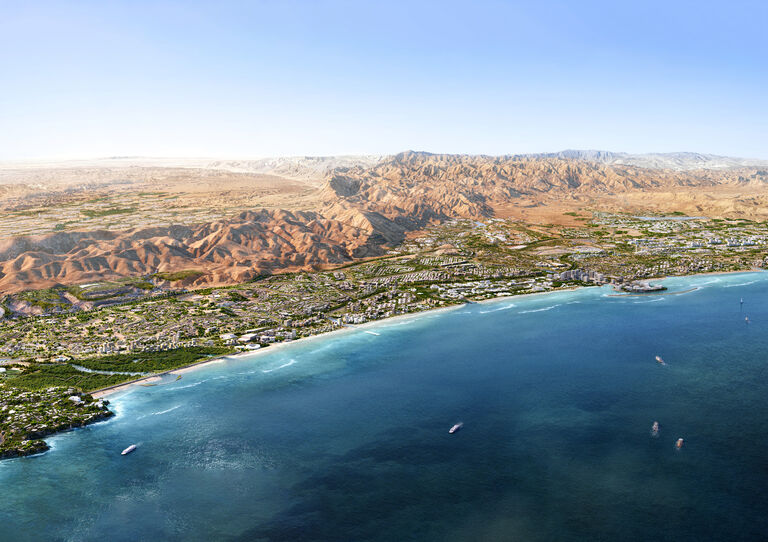
In our Muscat Structure Plan for Oman, covering 175,000 hectares, we did not treat climate resilience as merely defensive. Instead, we envisioned it as an embedded, dynamic system. Wadi corridors - natural valleys that had previously been inundated during repeated cyclone flooding - were transformed into permeable green networks and active water management systems. Grey water, which was previously wasted, was redirected into urban greening and local agriculture. Rather than fighting the sea with concrete seawalls, our coastal resilience framework utilized adaptive land-use strategies.
The result is a city structured to absorb and redirect environmental forces, rather than resist them. It is a living example of how the "slowest technology" of city building can finally catch up to the pace of a changing planet.
The question facing our cities is no longer how to protect the city from nature, but how to enrich the two by working together. By creating "sensory organs" through planning policy incentives and designed spaces that invite the environment in, we can move beyond the brittle, expensive cycle of repair and maladaptivity of cities.
The future of the city lies not in its fixedness, but in its capacity to evolve to meet emergent demands of it. If we can achieve this, our urban centres will no longer be inert and vulnerable forms etched into the earth, but thriving, self-organizing systems that are as dynamic as the natural world they inhabit.